



The exponential increase in scientific, technical, and legal data available on the Web, including research articles, patents, standards, and technical reports, has made their large-scale semantic processing, interlinking, and knowledge extraction a central challenge for the Web community. These data sources are heterogeneous, semi-structured, and domain-specific, containing complex elements such as text, tables, equations, and diagrams that make traditional data integration and analysis difficult. Yet, they hold immense potential for advancing knowledge discovery, open science, and evidence-based innovation. As the Web evolves into a vast ecosystem of human- and machine-generated content, there is a growing need to develop scalable AI models and semantic interoperable representations that transform this fragmented information into interconnected, machine-interpretable knowledge..
In this context, the SemTech 2026 workshop focuses on methods that combine Semantic Web technologies, Natural Language Processing, Large Language Models (LLMs), and other AI technologies to model knowledge across scientific, technical, and legal domains. The workshop invites research on knowledge graph creation, semantic annotation, LLM–KG hybrid reasoning, and trustworthy AI pipelines that enhance the reliability, interpretability, and reuse of Web data. This is particularly timely as the Web community seeks robust approaches to integrate symbolic and sub-symbolic methods for managing and understanding the growing body of domain-specific knowledge on the Web.
The workshop accepts contributions in all topics related to semantic web technologies and deep learning focused (but not limited) to:
There have been changes due to the conference policy
Formatting Requirements. Submissions must be written in English, in double-column format, and must adhere to the ACM template and format (also available in Overleaf ). Word users may use the Word Interim Template. The recommended setting for LaTeX is: \documentclass[sigconf, review]{acmart}. The papers must be submitted as PDF files to EasyChair
We will consider three different submission types:
Submissions should not exceed the indicated number of pages, including any diagrams and references.
The accepted papers will be available on the Workshop website. The proceedings shall be published in a CEUR-WS.org volume, which is free of charge for ALL authors. This publication is a "Diamond Open Access" service, meaning it is also free for all readers. The proceedings will be indexed on Google Scholar, DBLP, and Scopus as for the previous workshop editions.
CHANGE TO PROCEEDINGS PUBLICATION Due to conference policy, papers accepted by the workshop will be included in the Companion Proceedings of the Web Conference 2026 which are archived in the ACM Digital Library, subject to meeting the ACM open-access, formatting guidelines, and camera-ready timeline as provided and observed by the ACM Web Conference. See the section Important update on ACM's new open access publishing model for 2026 ACM Conferences! on the conference website.
Each submission will be reviewed by three independent reviewers on the basis of relevance for the workshop, novelty/originality, significance, technical quality and correctness, quality and clarity of presentation, quality of references and reproducibility. The review process will be single-blind.
All the information to register and attend the workshop can be found on the The Web Conf registration page.
SemTech4STLD workshop will take place on June 29th, 2026 (online from Dubai).
| Timing | Content |
|---|---|
| 14:00 - 14:45 UTC+04:00 |
Keynote and Q&A on Knowledge Graphs: From Search to Industrial Intelligence 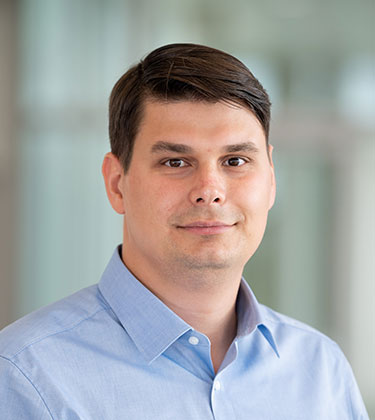
Speaker: Dr. Evgeny Kharlamov Abstract: Graphs have powered every leap in machine intelligence, from PageRank to Google's Knowledge Graph to today's agentic search. This keynote traces that arc into the enterprise, showing how knowledge graphs integrate industrial data (BASF, Chanel, Airbus), why vector-only RAG falls short for closed domains, and how Graph RAG grounds LLMs in verifiable, connected facts. It closes by linking knowledge graphs to agentic AI, where models become active knowledge agents. Short Bio: Dr. Evgeny Kharlamov is a Senior Research Manager and Expert at the Bosch Center for AI and an Associate Professor at the University of Oslo, with earlier years at the University of Oxford. Ranked 3rd worldwide in Knowledge Engineering (AMiner), his work spans Knowledge Graphs, Neuro-Symbolic AI, and Agentic Systems, bringing the semantic technologies from research into production at industrial scale. He has authored more than 200 papers at venues including WWW, ISWC, and NeurIPS (h-index 43, 6,700+ citations) and is a Principal Investigator on several European research project. His current work grounds large-scale, agentic AI in knowledge-graph reasoning. |
| 14:45 15:00 UTC+04:00 |
Virtual Coffee Break
|
| 15:00 17:00 UTC+04:00 Session I |
Paper I: The LOPE Method: Improving Consistent Property Extraction for Scientific Knowledge Graphs Using LLMs, Sandra Schaftner and Martin Gaedke (15 min + 5 Q&A) - Slides
Paper II: Saliency-Guided Embedding Alignment for Query-to-Document Legal Case Retrieval, Yu-Han Shi and Yao-Chung Fan (15 min + 5 Q&A) - Slides
Paper III: Beyond the Rules: Understanding the Design Logic of Internet Standards,Jie Bian, Michael Welzl and Nikolay Arefev (15 min + 5 Q&A) - Slides
Virtual Coffee Break (15 minutes)
Paper IV: The Atomic Instruction Gap: Instruction-Tuned LLMs Struggle with Simple, Self-Contained Directives,Henry Lim and Kwan Hui Lim (15 min + 5 Q&A) - Slides
Paper V: ORKG Properties Ontology Consolidated: LLM-Driven Refinement of Crowdsourced Knowledge for Machine-Actionability, Sandra Schaftner and Martin Gaedke (15 min + 5 Q&A) - Slides
Paper VI: Reasoning-Search-Augmented Large Language Models: A Survey and Taxonomy, Biswas Poudel, Nilson Chapagain, Amit Kumar and Xianshun Jiang (12 min + 5 Q&A) Paper VII: A Position Paper on Domain-Adaptive Text Classification and Abstractive Summarization using Semantic Enrichment and Transformer Models, Emmanuel Iko-Ojo Simon, Blessing Emedolu and Joshua Angyu (8 min + 5 Q&A) |
|
Closing remarks
|